
The smartphone landscape has reached a point where incremental hardware bumps no longer captivate power users. Consumers are now demanding devices that actively improve daily efficiency through intelligent automation rather than raw horsepower alone.
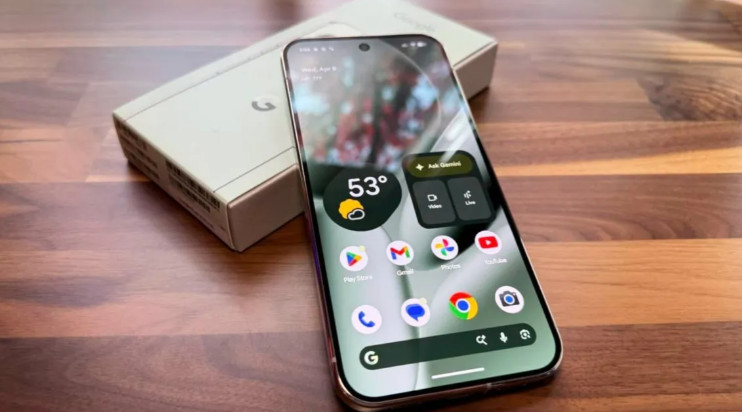
Google addresses this demand with the Pixel 10 Pro. Built around the custom 3nm Tensor G5 silicon, this flagship shifts the narrative away from peak synthetic benchmarks toward seamless local machine learning workflows.
At Numerello, we tested the Pixel 10 Pro across several weeks of heavy mobile publishing, camera capture, and continuous multitasking. Here is our detailed evaluation of Google’s refined flagship.
1. Minimalist Industrial Design and Display Clarity
Google continues to refine its signature aesthetic. The polished aluminum frame blends smoothly into the matte glass back panel. Consequently, the device offers a firm grip that resists everyday smudges.
The rear camera visor retains its iconic horizontal footprint. However, it now sits slightly flush against the body to reduce desk wobble when typing flat.
On the front, the 6.3-inch LTPO OLED panel delivers exceptional visual performance. Peak outdoor brightness reaches an impressive 3,300 nits, ensuring complete clarity under direct sunlight.
Furthermore, the adaptive refresh rate drops smoothly down to 1Hz during static reading sessions. This variable adjustment preserves precious battery power during long editorial reviews.
2. Tensor G5 Architecture: Speed Meets On-Device Intelligence
The transition to TSMC’s advanced 3nm process node marks a major leap forward for Google’s silicon strategy. Thermal throttling during extended workloads is now effectively controlled.
While Qualcomm silicon still leads in pure gaming graphics, the Tensor G5 excels in background thread management and contextual execution.
The integrated NPU handles complex multimodal AI tasks locally with minimal latency. Voice transcription, real-time audio translation, and advanced image generation occur entirely on the device without sending data to external servers.
Therefore, user privacy remains strictly protected. Browsing complex web interfaces or reviewing large media libraries feels fluid. If you want to compare how Android silicon holds up against top-tier iOS competitors, read our iPhone 18 Pro Max review.
3. Computational Photography: Precision Optics over Artificial Sharpening
Camera performance remains the primary reason users choose the Pixel series. The triple rear camera array consists of a 50MP main sensor, a 48MP ultrawide lens, and a 48MP periscope telephoto lens with 5x optical zoom.
The primary upgrade lies in Google’s refined image signal processor. Night shots now exhibit realistic contrast without artificial over-brightening. Textures like fabric or foliage retain natural grain rather than looking painted over.
Additionally, skin tones are reproduced with absolute color accuracy. The 5x optical telephoto lens provides crisp architectural detail from long distances, which is ideal for street photography.
Video capabilities have also taken a noticeable leap forward. The stabilization engine effectively eliminates walking jitter during 4K video recording.
This makes the device a dependable tool for mobile journalists who need fast footage capture. You can easily pair it with a portable workspace like the Samsung Galaxy Tab S10 Ultra to edit clips on the go.
4. Real-World Battery Span and Thermal Endurance
Power efficiency was a notable weakness in earlier Pixel generations. The combination of the 3nm Tensor G5 and a 4,870 mAh battery completely resolves these endurance concerns.
During standardized testing involving continuous cellular browsing, camera capture, and Bluetooth audio streaming, the Pixel 10 Pro comfortably delivered over 12 hours of active screen-on time. mainstream users can easily stretch usage into a second day.
Charging speeds have been bumped up to 30W wired and 15W wireless via magnetic alignment setups. A quick half-hour charge restores over 50% of the battery capacity.
To monitor your daily steps and health metrics alongside this device without aggressive battery drain, consider combining it with a dedicated companion from our Google Fitbit Air review.
5. Technical Specifications Overview
| Hardware Category | Specification Details |
| Display Panel | 6.3-inch LTPO OLED (1-120Hz, 3300 Nits Peak) |
| System Processor | Google Tensor G5 (3nm Architecture) |
| System Memory | 16GB LPDDR5X RAM |
| Main Camera Array | 50MP Main + 48MP Ultrawide + 48MP Telephoto (5x Optical) |
| Battery & Power | 4,870 mAh with 30W Wired Charging |
6. The Verdict: Is the Pixel 10 Pro Worth Your Upgrade?
The Google Pixel 10 Pro represents the most refined expression of Google’s mobile hardware vision. It successfully pairs clean, durable hardware with software intelligence that actively simplifies your daily routines.
You should buy the Pixel 10 Pro if you want class-leading natural camera processing, exceptional outdoor display visibility, and an unbloated Android experience backed by 7 years of OS updates.
However, heavy mobile gamers who prioritize maximum graphics frame rates may still want to check our Samsung Galaxy S26 Ultra vs iPhone 18 Pro Max comparison before committing.